Understanding the Air Quality Index (AQI) and What to Do on Bad-Air Days
The AQI number on your weather app hides a lot of useful information. What each AQI category means, which pollutants it measures and practical ways to protect your family when the air turns poor.
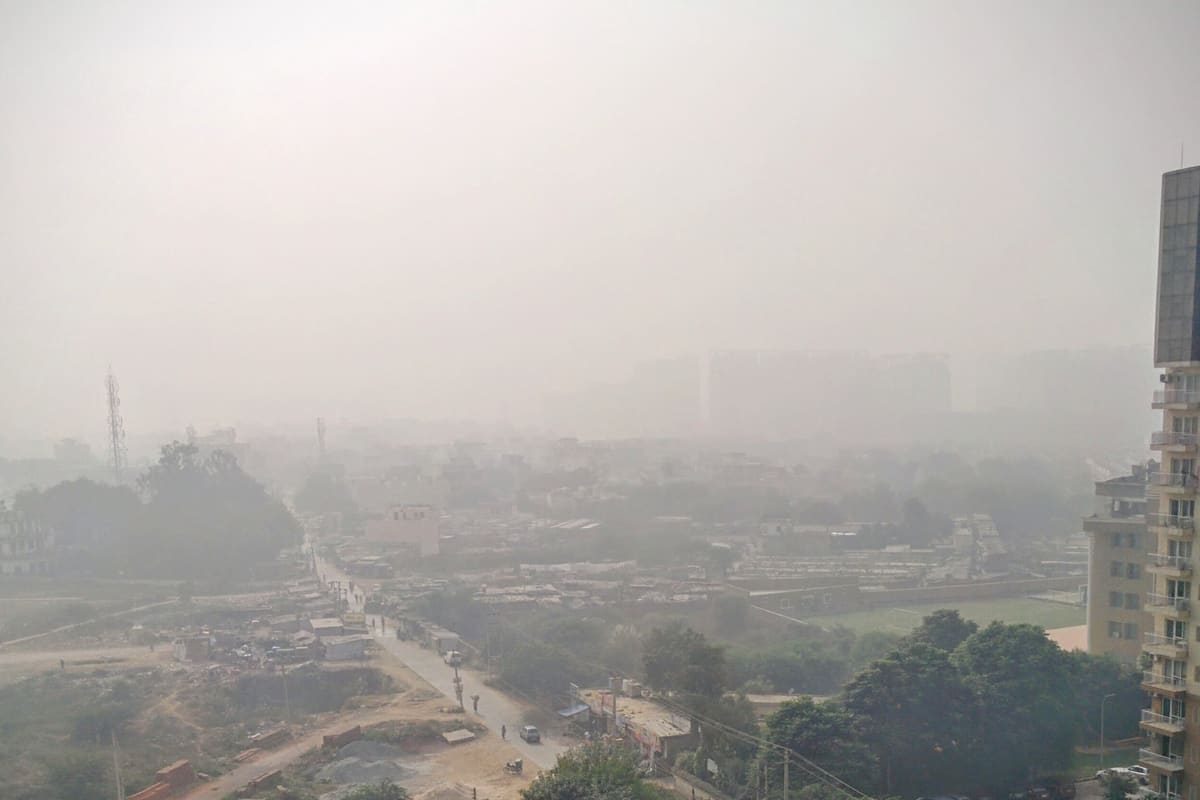
Smog as visible in the Gurgaon area near Delhi on Nov 2016. Photo: Saurabh Kumar via Wikimedia Commons, CC BY-SA 4.0.
As the monsoon withdraws and winter approaches, much of north India starts watching a new number alongside the temperature: the AQI. Weather apps show it, news channels discuss it and schools sometimes change their plans because of it. But a single number can be confusing. Is 180 bad? What about 250? And what should you actually do differently?
Here is a plain explanation of what the Air Quality Index tells you and how to use it.
What the AQI measures
The National Air Quality Index was developed by the Central Pollution Control Board (CPCB) to turn complicated pollution readings into one easy scale. Monitoring stations measure several pollutants, and each is converted into a sub-index. The overall AQI you see is the highest of these sub-indices, which means it reflects whichever pollutant is worst at that time.
The pollutants covered include:
- PM2.5, very fine particles small enough to travel deep into the lungs and even enter the bloodstream.
- PM10, slightly larger particles such as dust.
- Nitrogen dioxide, mostly from vehicles and burning fuel.
- Sulphur dioxide, largely from industry and power plants.
- Carbon monoxide.
- Ground-level ozone, which forms in sunlight from other pollutants.
- Ammonia and lead.
In most Indian cities, especially in winter, PM2.5 and PM10 are the ones driving the AQI up.
The six categories
The CPCB groups AQI values into six bands, each with its own colour:
- 0 to 50, Good: minimal impact.
- 51 to 100, Satisfactory: minor breathing discomfort for sensitive people.
- 101 to 200, Moderately polluted: breathing discomfort for people with lung disease such as asthma, and for those with heart disease, children and older adults.
- 201 to 300, Poor: breathing discomfort for most people on prolonged exposure.
- 301 to 400, Very poor: respiratory illness on prolonged exposure.
- 401 to 500, Severe: affects healthy people and seriously impacts those with existing diseases.
A useful way to read this is that anything above 100 is a signal for sensitive groups to take care, and anything above 200 is a signal for everyone.
Why the number changes during the day
Air quality can shift a lot over a few hours. Pollution often builds up at night and early morning in winter, when cool, still air traps smoke and dust close to the ground. Wind and rain usually improve things, while festivals, crop residue burning, construction and heavy traffic can make them worse.
Readings also vary between stations in the same city. Look for the station nearest to your home or school rather than a city average. The CPCB's SAMEER app and its website show station-wise data, and many state pollution control boards publish their own readings.
Who needs to be most careful
- Children, whose lungs are still developing and who breathe faster than adults.
- Older people.
- Pregnant women.
- Anyone with asthma, COPD, heart disease or diabetes.
- People who work outdoors or exercise outdoors for long periods.
If you or someone in your family has a lung or heart condition, ask your doctor for a plan for high-pollution days, including when to use medicines and which symptoms mean you should seek help.
What to do when the AQI is poor or worse
Reduce time outdoors
Move morning walks, runs and outdoor games indoors or to later in the day if readings improve. Heavy exercise makes you breathe more deeply and pulls in more pollution, so this matters more than a short walk to the shop.
Use the right mask
An ordinary cloth or surgical mask does little against fine particles. A well-fitted N95 or N99 respirator filters much more, but only if it seals around the nose and chin. Children need correctly sized masks, and people with breathing difficulties should check with a doctor before wearing one for long periods.
Keep indoor air cleaner
- Keep windows closed during the worst hours and ventilate briefly when readings are lower.
- Avoid burning incense, mosquito coils, candles or wood indoors on bad days.
- Do not smoke indoors, and avoid frying at very high heat without an exhaust fan.
- Wet-mop floors instead of sweeping dry, which stirs dust back into the air.
- If you use an air purifier, choose one sized for the room and keep its filter changed.
Watch for symptoms
Coughing, a scratchy throat, burning eyes and mild breathlessness are common on high-pollution days. Chest tightness, wheezing, severe breathlessness or chest pain are not normal, and need prompt medical attention, especially in children and people with existing conditions.
Official measures you may hear about
In Delhi and the National Capital Region, authorities follow a Graded Response Action Plan, which brings in steps such as restrictions on construction or certain vehicles as air quality worsens. Other cities have their own clean air action plans. School closures or changes in timing are announced by local authorities, so rely on official notices rather than forwarded messages.
Doing your own small part
Individual choices do not fix a city's air overnight, but they add up. Car-pooling or using public transport, keeping vehicles serviced, not burning garbage or leaves, and choosing quieter celebrations all reduce the load. Checking the AQI each morning, much like checking the weather, is the easiest habit to start with, and it lets you plan the day around the air your family will be breathing.