How to Organise a Small Kitchen So Cooking Feels Easier
A small kitchen does not have to feel cramped. Practical ways to clear counters, use walls and cabinet doors, store grains and masalas sensibly and set up zones that make daily cooking faster.
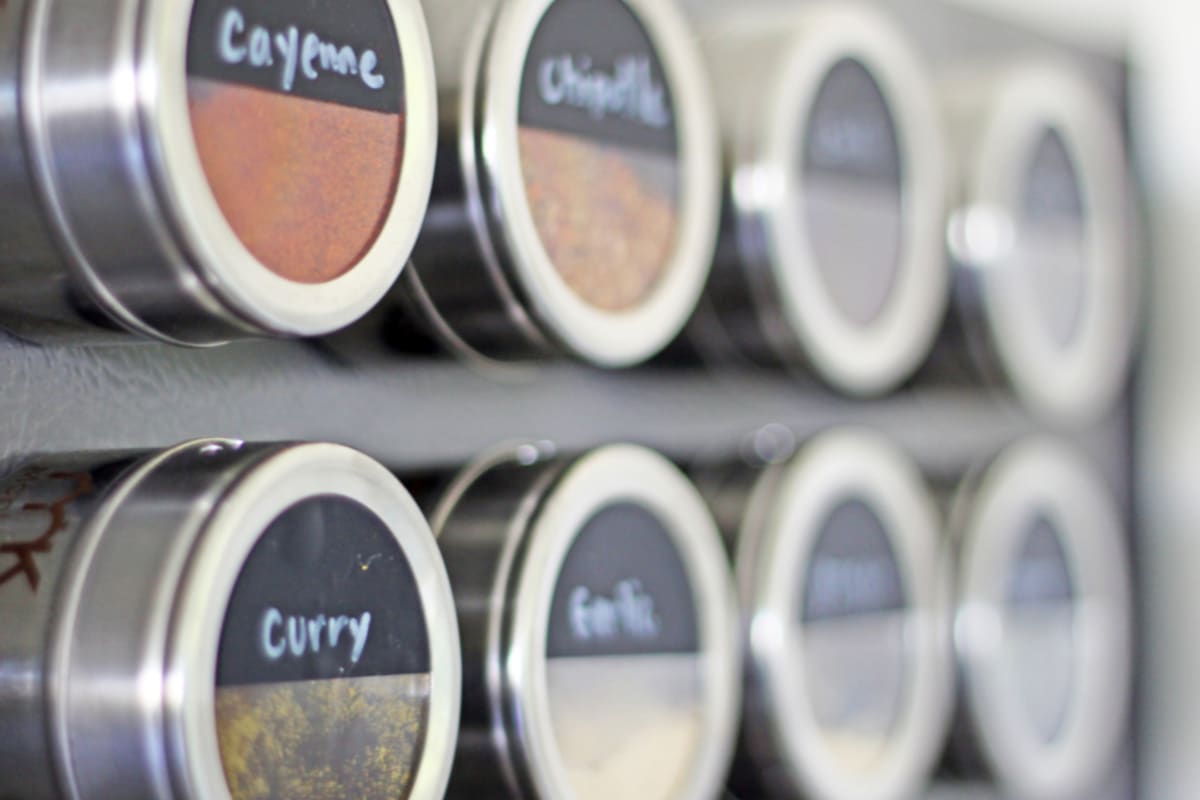
Spice Jar. Photo: Candace McDaniel via stocksnap, CC0.
In a small kitchen, every centimetre of counter is precious, and it is usually covered: the mixer, a tea tin, yesterday's vessels, a bag of onions, the gas lighter, a stack of dabbas and a phone playing a recipe video. The space is not always the real problem. Often it is simply holding too much, in the wrong places.
The good news is that a compact kitchen can be very efficient. When everything is within an arm's reach, cooking is faster than in a large kitchen where you walk back and forth. The trick is deciding what deserves that reach.
Take everything out, one section at a time
Trying to reorganise the whole kitchen in one day usually ends with everything on the floor and no dinner. Work in sections instead: one shelf, one drawer or one cabinet each evening. Empty it completely, wipe it clean and look honestly at what was inside.
Kitchens collect duplicates. Many homes have four ladles, three graters, a drawer of plastic takeaway boxes with no lids and gift sets of glasses that are never used. Keep what you use every week. Move occasional items, such as the large biryani vessel or festival serving dishes, to a high loft or a box elsewhere. Pass on or recycle what you do not use at all.
Set up simple zones
Think about how you actually cook, then store things where they are needed:
- Near the stove: oil, salt, the masala box, ladles, spatulas, tongs and the pressure cooker.
- Near the counter where you chop: knives, chopping board, peeler, grater and a small bowl for peels.
- Near the sink: dish soap, scrubbers, a drying rack and cleaning cloths.
- Near the fridge or storage: grains, pulses, flour and snacks.
- Close to where you serve: plates, glasses, cups and cutlery.
This sounds obvious, but most kitchens grow randomly. A few minutes of moving things into zones saves many steps every day.
Use the walls
When counter and cabinet space run out, look up. Walls are the most under-used storage in a small kitchen.
A wall rail with S-hooks can hold ladles, strainers, tongs and small pans. A narrow shelf above the counter can hold daily-use jars. A magnetic knife strip keeps knives off the counter and away from children's hands. Wall-mounted racks for plates and glasses free up entire cabinets. If you rent and cannot drill, adhesive hooks and tension rods are worth trying for lighter items.
Keep the area immediately around the stove and gas pipe clear. Do not hang cloths, plastic containers or paper near the flame, and never store anything that blocks ventilation around the gas cylinder.
Make cabinets work harder
Deep cabinets swallow things. Items at the back are forgotten until they expire. A few low-cost additions help:
- Stackable containers of the same shape use shelf space far better than a mix of jars and packets.
- A small wire shelf insert creates a second level inside a tall cabinet, for plates above and bowls below.
- A turntable or lazy susan in a corner cabinet brings back items into view.
- The inside of a cabinet door can hold a slim rack for foil, cling film or lids.
- Pull-out baskets or simple plastic trays turn a deep shelf into drawers you can slide out.
Store grains and masalas well
Buying rice, atta and dal in bulk is often cheaper, but only if they stay fresh. Transfer them into airtight containers soon after buying, and label each container with the contents and the date. Transparent containers let you see when stock is running low. Use the first in, first out rule: when you refill, pour the old stock on top or use it before opening the new pack.
Keep whole spices and ground masalas away from the heat and steam of the stove where possible. The daily masala dabba can sit near the stove, but refill jars are better stored in a cooler cabinet. Many households add dried neem leaves or bay leaves to grain containers by tradition; whatever you use, regular checking and airtight lids matter most in keeping insects out.
Clear the counter, then protect it
Decide what truly needs to live on the counter. For many people it is just the stove, one appliance used daily and perhaps a tea and sugar set. Everything else goes into a cabinet or onto the wall. A clear counter makes chopping, rolling rotis and cleaning much easier.
To keep it that way, give things a fixed home and put them back after use. The chopping board goes back on its hook. The mixer returns to its shelf once it cools.
A ten-minute reset each night
Small kitchens get messy quickly, but they also get clean quickly. Before bed, spend ten minutes washing or soaking vessels, wiping the counter and stove, emptying the dustbin if it is full and putting stray items back in their zones. Soaking overnight vessels in the sink while you finish other chores makes the next morning's work lighter.
Once a month, check the fridge and storage containers for anything past its best, and wipe the shelves. Regular small effort beats a big clean-up every Diwali.
Space that fits the way you cook
There is no perfect layout for every home. A family that makes fresh rotis twice a day needs different things within reach than someone who mostly makes rice and one sabzi. Arrange your kitchen for your meals, adjust after a couple of weeks and let the space serve you, rather than the other way round.