How to Make a Simple Monthly Household Budget That Actually Works
A household budget is just a plan for money that has not been spent yet. Here is a simple way to build one on paper, with a worked example on a Rs 40,000 monthly income.
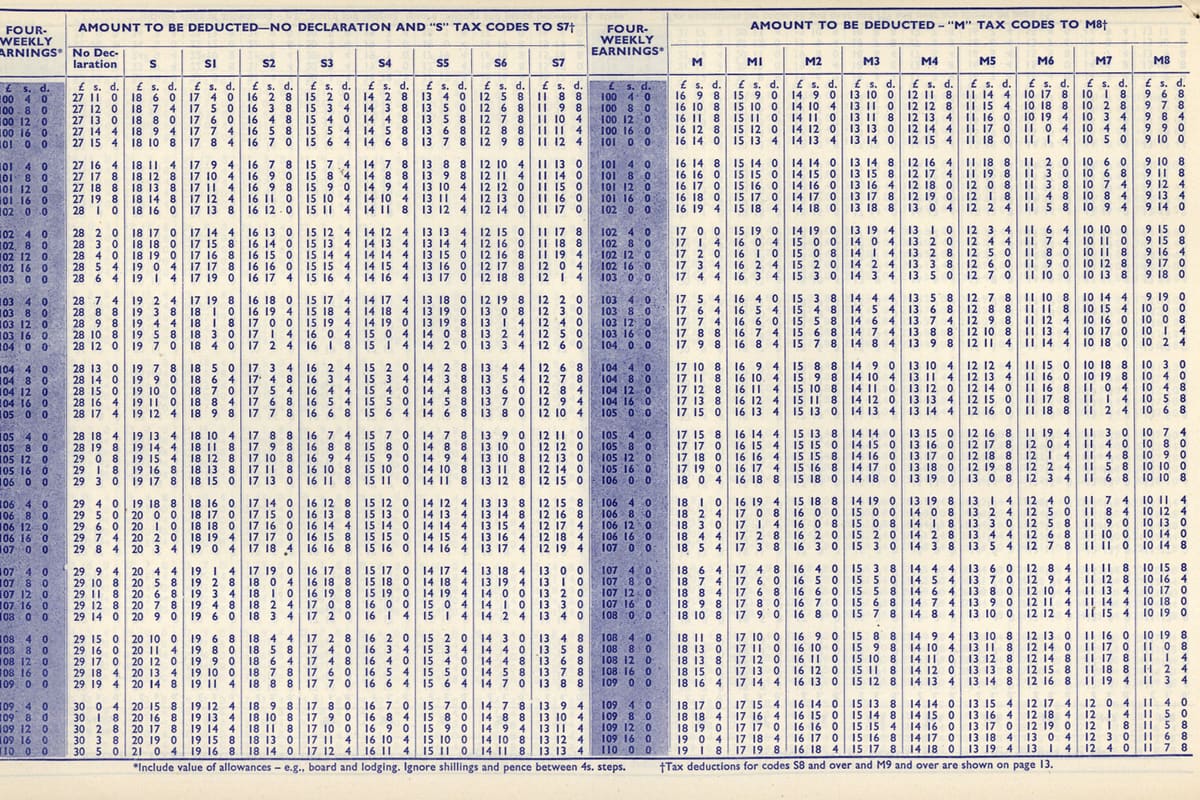
Secondary Employment And Deduction Tax Codes (8743013884). Photo: Archives New Zealand from New Zealand via Wikimedia Commons, CC BY 2.0.
By the twentieth of the month, many households start asking the same question: where did it all go? Usually nothing dramatic happened. The money went in small, sensible pieces, a gas refill here, a school project there, a few food deliveries on tired evenings. A budget does not stop you spending. It simply decides in advance where the money should go, so the end of the month stops being a surprise.
You do not need an app or a spreadsheet to start. A notebook, a pen and one quiet hour are enough.
Start with the money that actually arrives
Write down your take-home income for the month: the amount that lands in your bank account after tax, provident fund and other deductions. If two people earn, add both. If part of your income is irregular, such as tuition fees, overtime or a small business, use the lowest amount you have earned in a normal month over the last half-year, not the best one. It is far easier to budget with a cautious number and enjoy the extra than the other way round.
Look back before you plan ahead
Before deciding what you should spend, find out what you do spend. Go through the last month's bank statement and your UPI payment history, and jot down every expense into rough groups. Add the cash you remember spending on vegetables, auto fares and tea stalls. The list does not need to be perfect. The point is to see the pattern. Many people are surprised by one category, often eating out, small online orders or mobile recharges spread across several family members.
Sort expenses into three groups
Once you can see the spending, divide it like this:
- Fixed costs: rent or home loan EMI, school fees, insurance premiums, mobile and internet plans, domestic help, society maintenance.
- Variable essentials: groceries, milk, vegetables, cooking gas, electricity, fuel and transport, medicines.
- Flexible spending: eating out, shopping, entertainment, gifts, subscriptions and small treats.
Fixed costs are hard to change quickly. Variable essentials can be trimmed with planning. Flexible spending is where most of the room to save usually is.
Pay your savings first
The most common budgeting mistake is saving whatever is left at the end of the month, because often nothing is. Instead, decide a savings amount at the start and move it out of your main account on salary day, before the spending begins. Even a modest fixed amount, done every single month, builds a habit that matters more than the size of the number.
If you do not yet have an emergency fund, build that first. A common guideline is to keep three to six months of essential expenses in a savings account or another safe, easy-to-access place. It is what stops a hospital visit or a sudden job change from turning into a loan.
Plan for the costs that are not monthly
Some of the biggest budget shocks are expenses that come once or twice a year: festival shopping, school uniforms and books, a wedding in the family, vehicle insurance, a trip home. Add up what these cost you over a year, divide by twelve and set that amount aside every month in a separate pot. When Diwali or the new school term arrives, the money is already waiting.
A worked example
Here is how a family with a take-home income of Rs 40,000 might plan a month. Your numbers will be different, but the shape is useful:
- Rent: Rs 12,000
- Groceries, milk and vegetables: Rs 8,000
- Savings, moved on salary day: Rs 5,000
- School fees, monthly share: Rs 3,000
- Transport and fuel: Rs 2,500
- Personal spending and eating out: Rs 2,500
- Electricity, water and cooking gas: Rs 2,000
- Annual expenses pot: Rs 2,000
- Mobile and internet: Rs 800
- Buffer for the unexpected: Rs 2,200
Every rupee has a job, and the total comes to exactly Rs 40,000. The buffer is important. Something always comes up, and a budget with no slack tends to be abandoned in the second week.
Make it easy to stick to
A plan on paper only helps if daily spending follows it. A few simple methods make that easier:
- Keep a separate account or wallet for flexible spending, so you can see at a glance how much is left.
- Withdraw a fixed amount of cash for vegetables and small daily purchases each week.
- Write down expenses every evening for the first month; it takes two minutes and builds awareness quickly.
- Review subscriptions and recurring payments every few months and cancel the ones nobody uses.
Frequently asked questions
What is the 50/30/20 budgeting rule?
It is a rough guide that suggests spending about half of your income on needs, about thirty percent on wants and twenty percent on savings. In many Indian cities rent alone can take a large share, so treat it as a starting point rather than a rule you must meet.
Should I track every rupee?
For the first month or two, it helps. After that, most people only need to track the flexible categories closely, because fixed costs look after themselves.
What if my expenses are more than my income?
Start with the flexible spending, then look at variable essentials such as electricity and transport. If fixed costs are the problem, larger decisions like moving, refinancing a loan or changing a school may be needed. Speaking to a qualified financial adviser can help in that situation.
Give it three months
The first budget is always a little wrong. Some categories will be too generous and others too tight. Adjust at the end of each month rather than giving up. By the third month, most families find their numbers settle, and the twentieth of the month starts to feel a lot less stressful.