Crypto Tax in India 2026: The 30% Tax, 1% TDS, New Reporting Rules and What the '2% TDS' Claim Gets Wrong
Every rally sends Indians searching for how crypto gains are taxed. The rules in 2026: a flat 30% tax plus cess on gains, no loss set-off, 1% TDS on sales above a threshold, and stricter reporting by exchanges from 1 April 2026. Also, why the viral claim of an extra 2% TDS is not official.
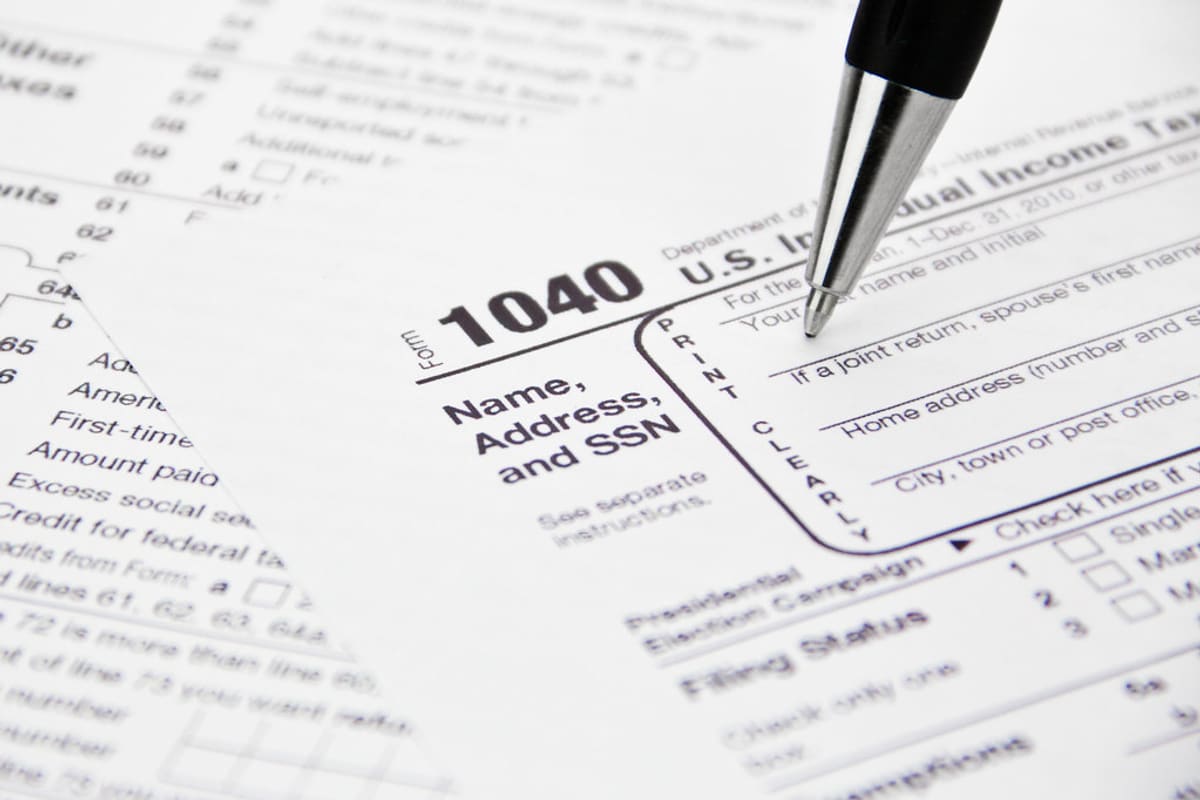
IRS 1040 Tax Form Being Filled Out. Photo: kenteegardin via Flickr, CC BY-SA 2.0.
Whenever Bitcoin rallies, "crypto tax India" rises with it. The rules have been stable since 2022 but are widely misunderstood, and a claim about an "extra 2 percent TDS" has been circulating this year without any official basis. This guide sets out what the law actually says for financial year 2026-27, how the numbers work with an example, and what changed on 1 April 2026.
What counts as a Virtual Digital Asset
Indian tax law does not use the word cryptocurrency. It taxes Virtual Digital Assets, or VDAs, a definition broad enough to cover cryptocurrencies such as Bitcoin and Ethereum, NFTs and other digital tokens. If you buy, sell, swap or receive any of these, the VDA rules apply.
The 30 percent tax
Income from the transfer of a VDA is taxed at a flat 30 percent, plus 4 percent health and education cess, making an effective rate of 31.2 percent. Surcharge may apply at higher income levels. This rate applies regardless of your income slab and regardless of how long you held the asset; there is no lower long-term rate as there is for shares.
Only one deduction is allowed: the cost of acquisition, meaning what you paid for the asset. Exchange fees, internet costs, hardware or any other expense cannot be deducted.
No set-off, no carry-forward
This is the rule that surprises people most. A loss on one crypto trade cannot be set off against a gain on another crypto trade, let alone against salary, business income or capital gains from shares. Losses also cannot be carried forward to future years. Each profitable transfer is taxed on its own.
The 1 percent TDS
When you sell a VDA, 1 percent of the sale value is deducted as tax at source if your total sales in the financial year exceed Rs 50,000 for "specified persons" (broadly, individuals and HUFs without business income above audit limits) or Rs 10,000 for others. On an Indian exchange the platform deducts it; in a peer-to-peer deal the buyer must. TDS is not an extra tax: it is an advance payment that you claim against your final liability when you file, and it is refunded if you end up owing less.
What changed on 1 April 2026
The government kept the 30 percent rate and the 1 percent TDS but tightened reporting. From 1 April 2026, prescribed crypto entities such as exchanges must report transactions in greater detail to the tax department. Entities face a penalty of Rs 200 a day for delayed reporting and Rs 50,000 for inaccurate information. For individuals the practical effect is that the department will see your trades, so unreported gains are far more likely to be flagged.
The "2 percent TDS" claim
Posts and videos have claimed that an additional 2 percent TDS, taking the total to 3 percent, is coming or already in force. There is no official notification, circular or Finance Act provision to that effect. The TDS rate remains 1 percent. If the rate changes, it will appear in a Finance Bill or a CBDT notification, not in a forward.
A worked example
- You buy Bitcoin worth Rs 1,00,000 and later sell it for Rs 1,40,000 on an Indian exchange.
- Gain: Rs 40,000. Tax at 30 percent: Rs 12,000, plus 4 percent cess of Rs 480, total Rs 12,480.
- TDS: 1 percent of the Rs 1,40,000 sale, Rs 1,400, deducted by the exchange.
- When you file, you pay Rs 12,480 minus the Rs 1,400 already deducted, so Rs 11,080.
- If you had a separate trade with a Rs 20,000 loss, it changes nothing; the Rs 12,480 still applies.
Filing
Crypto income is reported in the ITR under the schedule for VDAs, transaction by transaction, with date, cost and sale value. Download the annual statement from your exchange, reconcile it with Form 26AS and the Annual Information Statement, which will show the TDS, and keep records for at least six years. If you have many trades, a chartered accountant or a crypto tax tool will save time.
Frequently asked questions
What is the crypto tax rate in India in 2026?
A flat 30 percent on gains plus 4 percent cess, with no slab benefit and no lower rate for long-term holding.
Can I set off crypto losses against profits?
No. Losses on VDAs cannot be set off against any other income, including other crypto gains, and cannot be carried forward.
Is the TDS on crypto 1 percent or 3 percent?
1 percent. There is no official notification of an additional 2 percent.
Do I pay tax if I only hold crypto?
No. Tax arises on transfer: selling, swapping one token for another, or spending it. Holding alone is not taxed.
Is swapping Bitcoin for Ethereum taxable?
Yes. A swap is a transfer of one VDA and acquisition of another, so any gain on the asset you gave up is taxed.