Budget Skincare: Where to Spend and Where to Save
Expensive does not always mean better in skincare. A practical guide to which products are worth spending a little more on, where cheaper basics work just as well, and how to avoid wasting money.
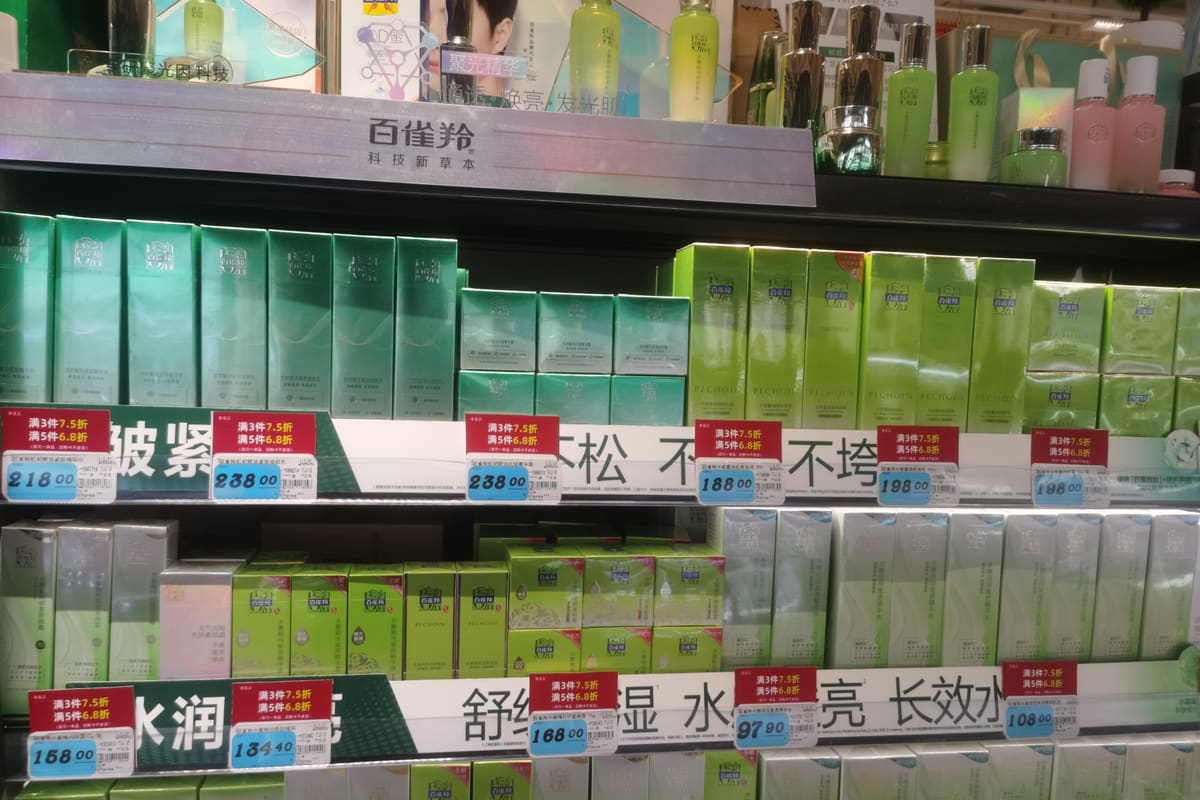
Pechoin products on the shelf-20240303. Photo: Shwangtianyuan via Wikimedia Commons, CC BY-SA 4.0.
Walk down any beauty aisle or scroll any shopping app and you will find two face washes that look almost identical, one at Rs 150 and the other at Rs 1,500. It is natural to assume the costlier one must be better. In skincare, that is often not true. Price reflects many things, including packaging, fragrance, advertising and where the product is sold, and only some of it has anything to do with what the product does for your skin.
With a little knowledge, you can build a routine that works well on a modest budget, and put your money where it makes a real difference.
Save on the cleanser
A face wash spends less than a minute on your skin before it is rinsed off. Its only job is to remove sweat, sunscreen, dirt and excess oil without stripping the skin. A plain, gentle, fragrance-free cleanser from the chemist or supermarket does this perfectly well. Special ingredients in expensive cleansers, such as botanical extracts or vitamins, mostly go down the drain.
What to look for is simple: skin that feels clean but not tight or squeaky after washing. If it feels tight, the cleanser is too harsh, whatever it costs.
Save on basic moisturiser
Moisturisers keep the skin barrier comfortable by holding water in and reducing dryness. The ingredients that do this, like glycerin, ceramides, petrolatum and simple oils, are not expensive. A basic, fragrance-free cream or gel suited to your skin type is enough for most people. For very dry patches on elbows, heels or lips in winter, plain petroleum jelly is still one of the cheapest and most effective options.
Spend on sunscreen you will actually wear
If there is one place to spend a little more, it is sunscreen, and the reason is not magic ingredients. It is texture. Sunscreen only protects when you apply enough of it, every morning, and reapply when you are outdoors. A cheap sunscreen that feels greasy, leaves a white cast or stings your eyes tends to be used sparingly or skipped, which means it is not really protecting you.
Try a few affordable options in small sizes first, because there are many good budget sunscreens. Choose broad-spectrum protection with SPF 30 or more. If a mid-priced one is the only texture you are happy to wear daily, that is money well spent. Calculate how long a tube lasts when you use the full amount; it is usually quicker than people expect.
Spend carefully on targeted treatments
Active ingredients for specific concerns, such as acne, dark spots or signs of ageing, are where results vary most. Well-studied ingredients like niacinamide, azelaic acid, salicylic acid, vitamin C and retinoids are widely available at many price points. Often a simple, affordable formula with the right ingredient at a sensible strength works as well as a luxury version.
Buy one targeted product at a time, and give it at least eight to twelve weeks before judging. Buying three serums together means you cannot tell which one helps and which one irritates, and you may end up throwing away two half-used bottles.
For moderate to severe acne, pigmentation that is spreading or any skin problem that affects your confidence, a dermatologist appointment can actually be the cheaper route. A correct diagnosis and prescribed treatment often work better than months of trial-and-error purchases.
Things you can skip entirely
- Multiple toners, essences and mists: pleasant, but not necessary for most skin.
- Separate day and night creams, unless one contains sunscreen and you need it.
- Harsh physical scrubs with rough granules, which can irritate the skin. A gentle chemical exfoliant used occasionally is kinder if you want exfoliation at all.
- Products sold with dramatic before-and-after promises of overnight results.
- Large value packs of an untested product, which are no bargain if your skin does not suit them.
A warning about fairness and quick-fix creams
Be very cautious with creams that promise rapid lightening, especially cheap ones sold without clear labelling or recommended by word of mouth. Some such creams have been found to contain steroids or other ingredients that should only be used under a doctor's care. Misused on the face, steroids can cause thinning of the skin, stubborn acne, redness and dependence that is hard to reverse. Never use a steroid cream on your face unless a doctor has prescribed it and told you how long to use it.
Getting more from what you buy
- Compare price per ml or per gram, not the price on the pack.
- Buy smaller sizes of anything new until you know it suits you.
- Check the expiry date and the period-after-opening symbol, usually a small open jar with a number of months.
- Store products away from heat and direct sunlight, including a hot bathroom window sill.
- Use the amount the label recommends. Using too little sunscreen saves money but wastes the protection.
A sample budget routine
- Morning: a gentle cleanser or plain water rinse, a basic moisturiser and a broad-spectrum sunscreen.
- Night: the same cleanser and moisturiser, plus one targeted treatment only if you have a specific concern.
That is three or four products in total, and the one you spend a little more on is the one that protects you every day.
Value is about fit, not price
The best skincare product is one that suits your skin, feels pleasant to use and fits your wallet well enough that you keep buying it. Spend where it changes whether you will use it, save where a simple formula does the job, and leave the rest on the shelf.